The Púca and Guising
The Púca, alternatively spelt Pooka, is from Celtic mythology that localized from Ireland. My reasoning for choosing this specific location of the Celtic mythology is the ties to my family’s history. A good portion of my family is from Ireland, so I reflected my roots with a piece for my project. For this creature, I decided to include two things in my research. 1st I wanted to include its importance to the mythology it was derived from. 2nd the style of costume design (guising) that culture used to reflect its history.
The History:
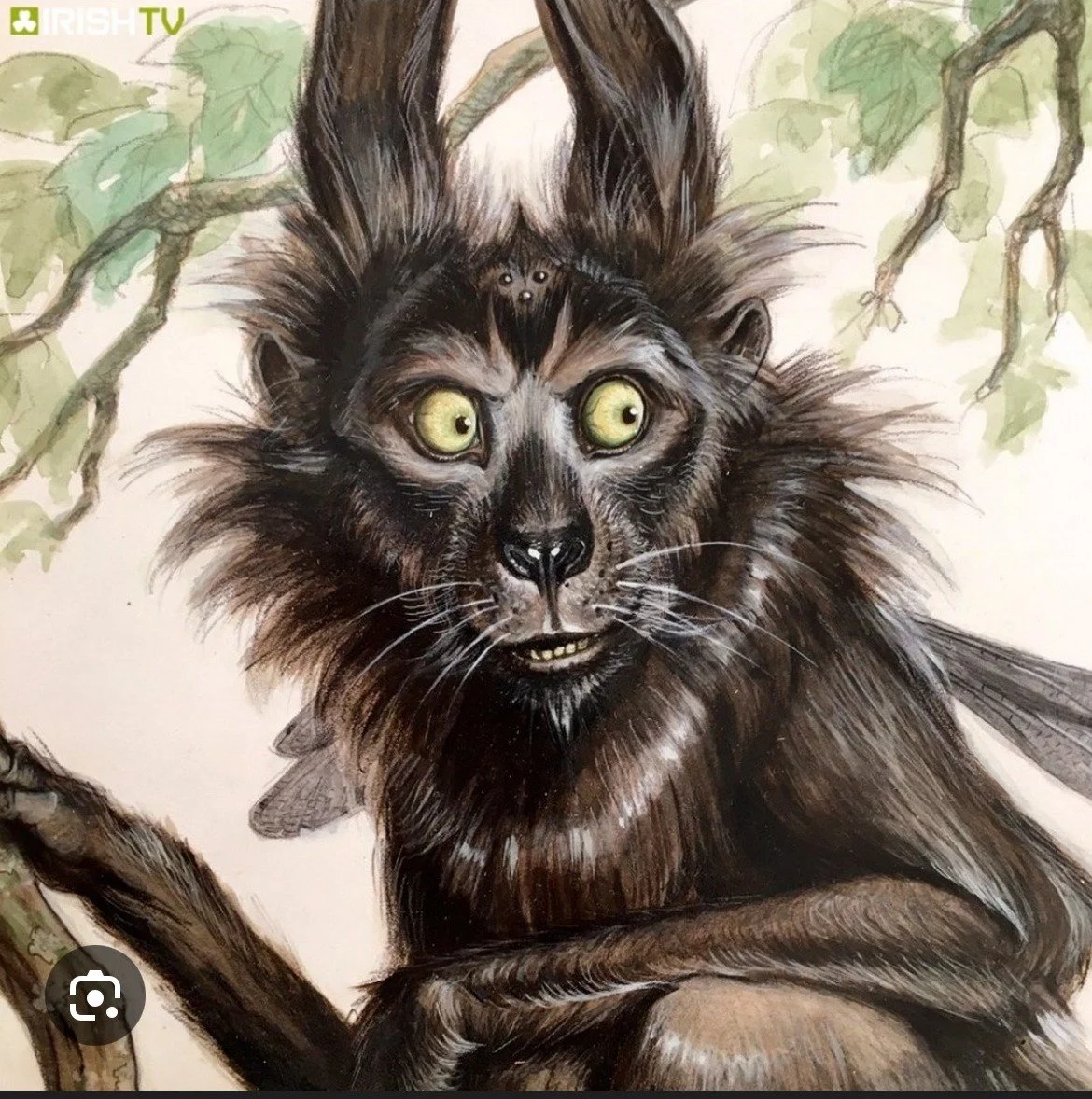
Illustration by The Púca. (2023, September 13). Go-To-Ireland.com. https://www.go-to-ireland.com/culture/the-puca/
The Púca is illustrated as having a cat-like face, along with rabbit-like ears, a monkey-like body with little fairy wings that seem too small for its size. Along with two big, green eyes with a smaller set of three spider-like eyes, and a longish tail. Often described as mischievous yet wise, the Púca can bring both blessings and tricks. It becomes more active during the Samhain Festival to where it roams the night and changes the fortunes of those that cross it. It is both described as being both a trickster and a good luck charm. If it doesn’t trick you when you come across it, it is a sign of good fortune and luck.
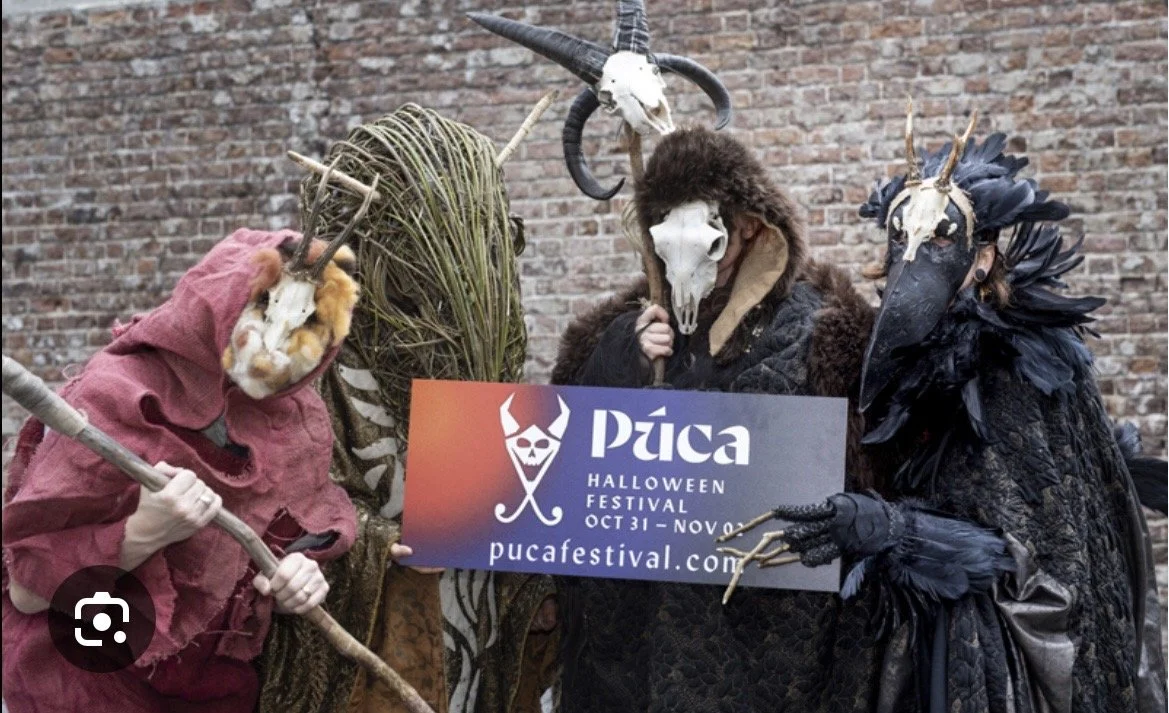
Modern Samhain Festival in Ireland
The Samhain Festival is depicted as the end of the harvest season, when all the crops have been picked and stored for the ‘New Year.’ This was historically a time of celebration; the people would turn off all of their personal hearths and go collect around a giant fire. They would throw animal bones into the fire as a form of sacrifice to their Gods for a prosperous new year. This style of fire is called Bone Fire which is now known as Bonfire.
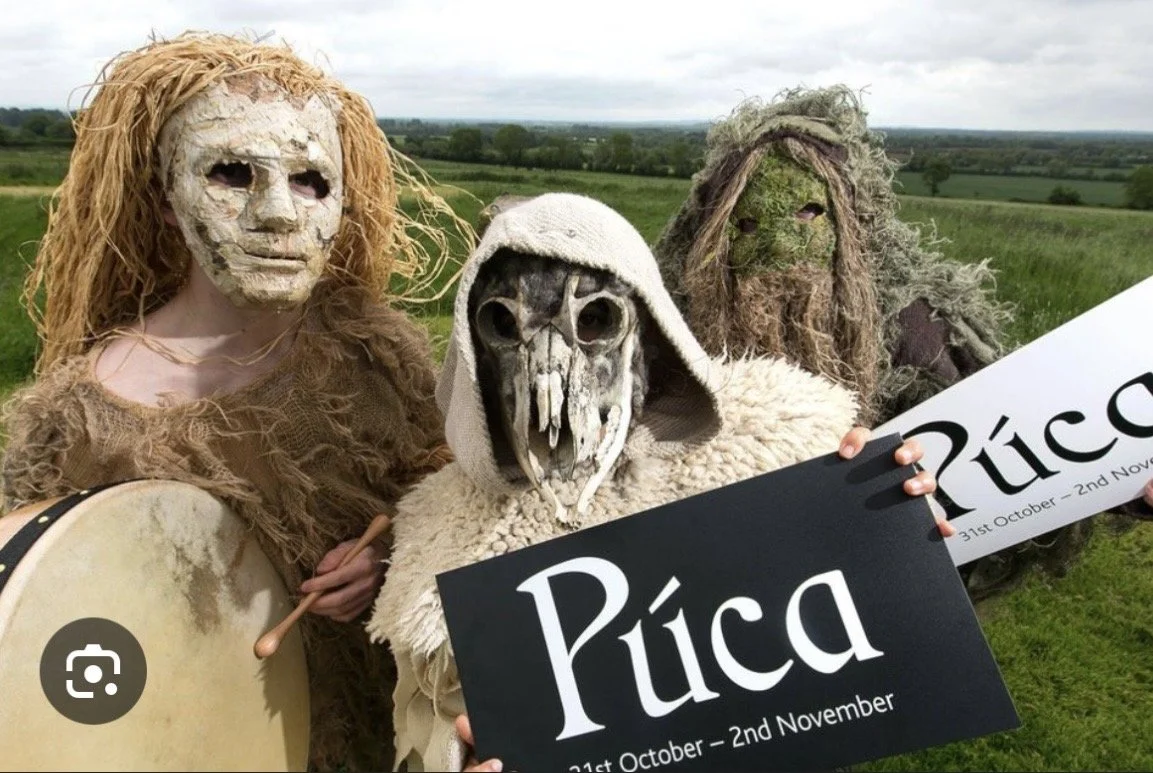
Photos from Discover the Story Behind Púca Festival | Puca Festival. (2025, October 14). Púca Halloween Festival 2025. https://pucafestival.com/about-puca/
Upon lighting the fire, they would perform a ritual to invite loved ones from the Otherworld. They would then have a feast with those who had passed. Then end the festival by take a portion of the Bonfire to relight the Hearths within their homes. However, the biggest issue with this was that malevolent Spirits and Fae would try to come from the otherworld to attack, curse or trick the living.
To prevent this the Celtics would carve faces in turnips and lit little fires within them to protect their homes. Additionally, they would wear special costumes and performed rituals to ward off the evil spirits to protect the others. This concept is called Guising, which this style of costume is what I’ll be focusing on for the design of my Púca costume. You can now see why people believe this to be the precursor to Halloween. Dressing up in costumes, eating sweet treats, partying and carving pumpkins.
The Process:
The costume combines the visual styles of Guising with modern costume design techniques. The costumes were often made from natural materials, such as burlap, leather, foliage, fur and feathers, to create garments reminiscent of animals and rustic attire. Masks made from carved wood, papier-mâché and/or basket weaving material. They would be painted with natural pigments and would represent whatever creature they based it off of. I used these techniques to create my Guise based on the Púca. However, I adopted modern designing techniques to reflect the modern ideals of Halloween.
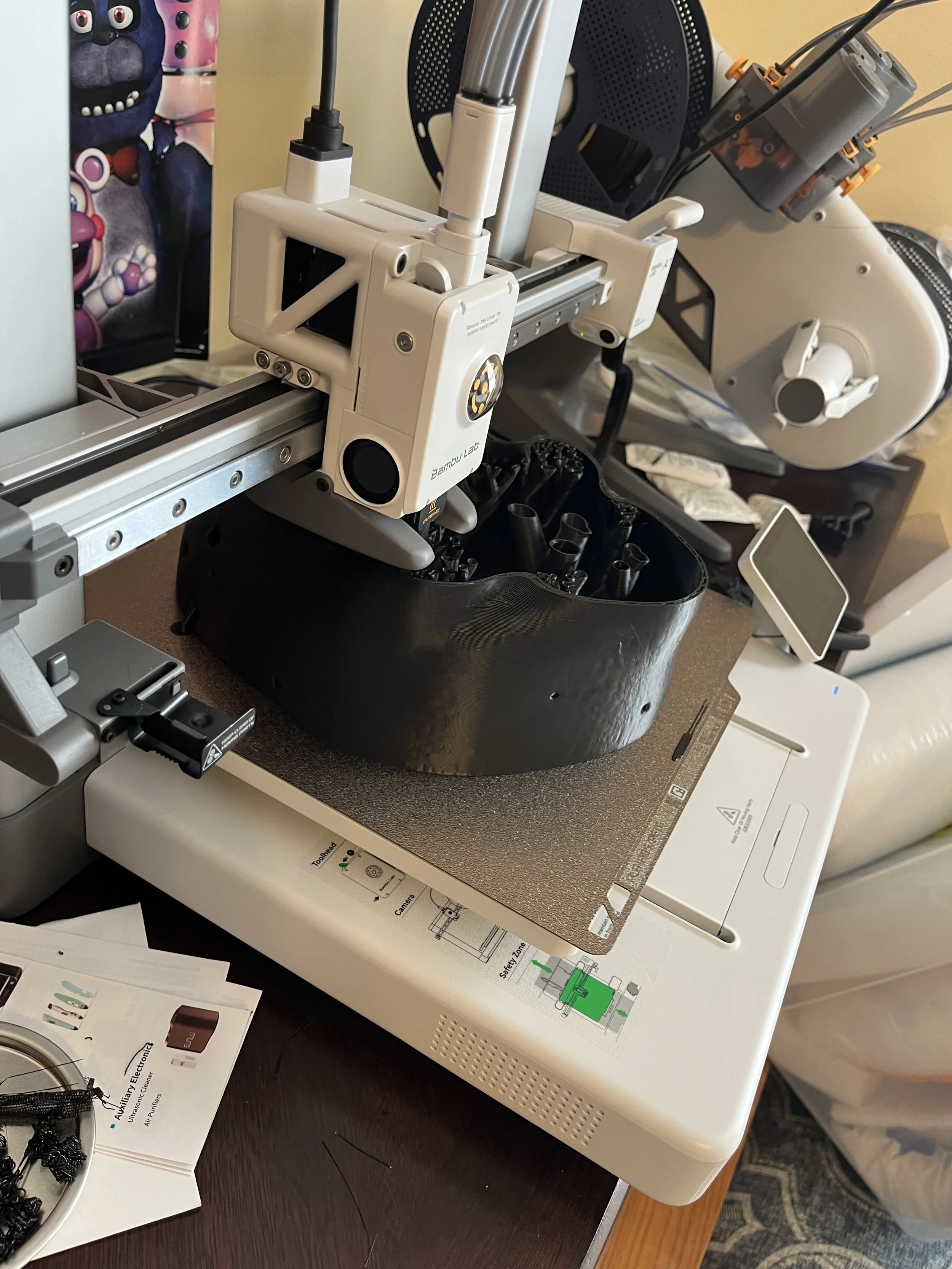
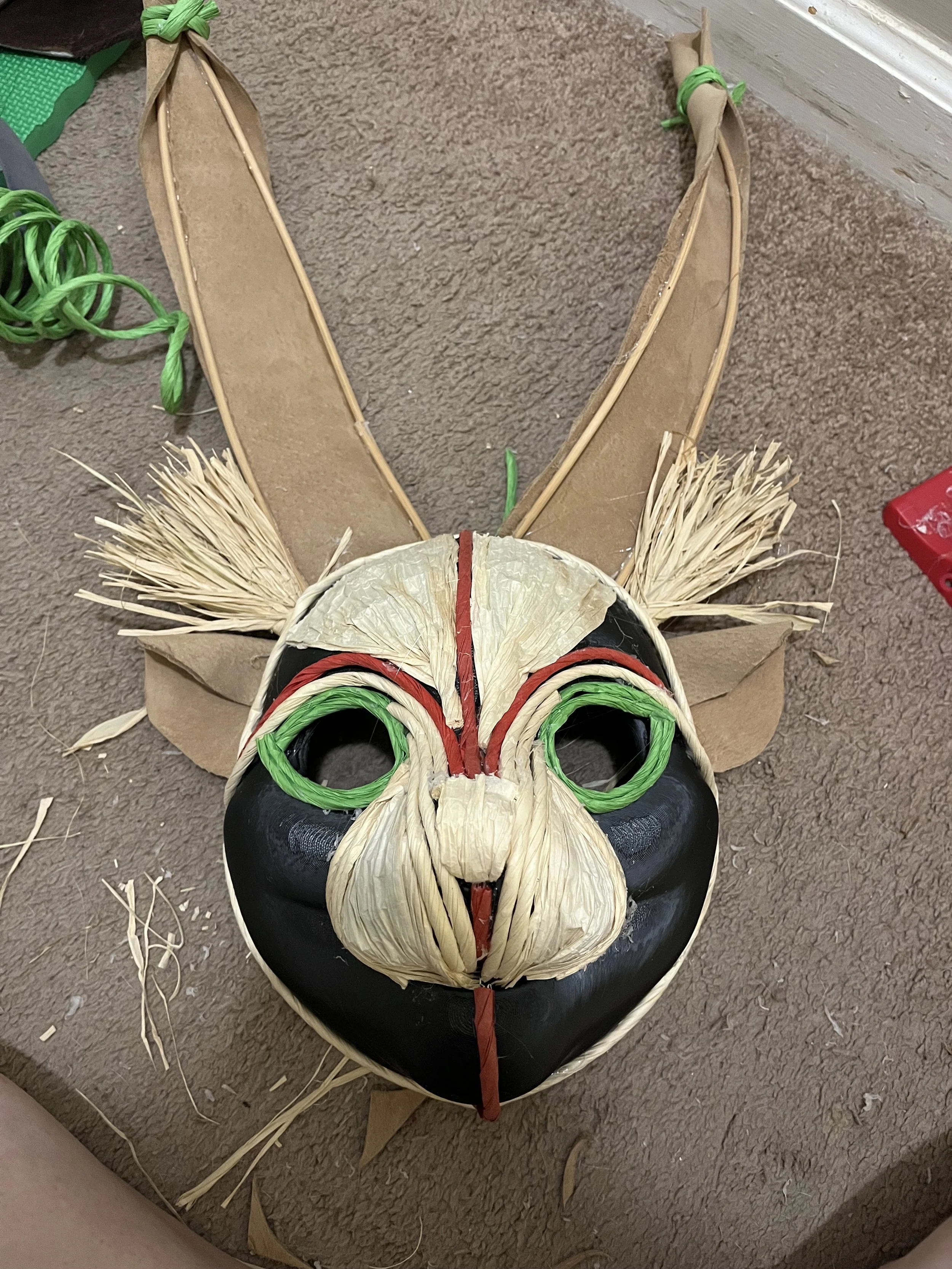
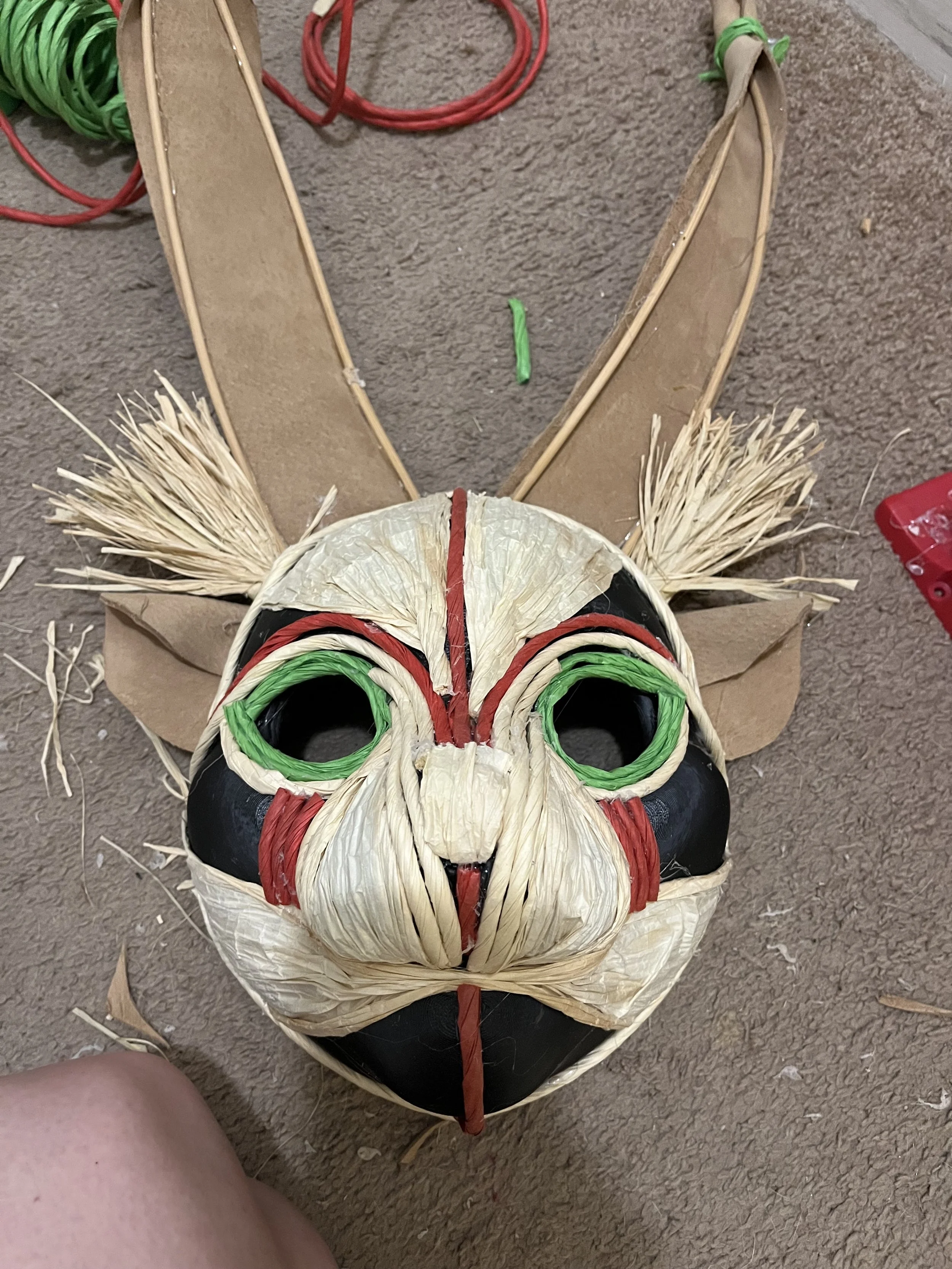
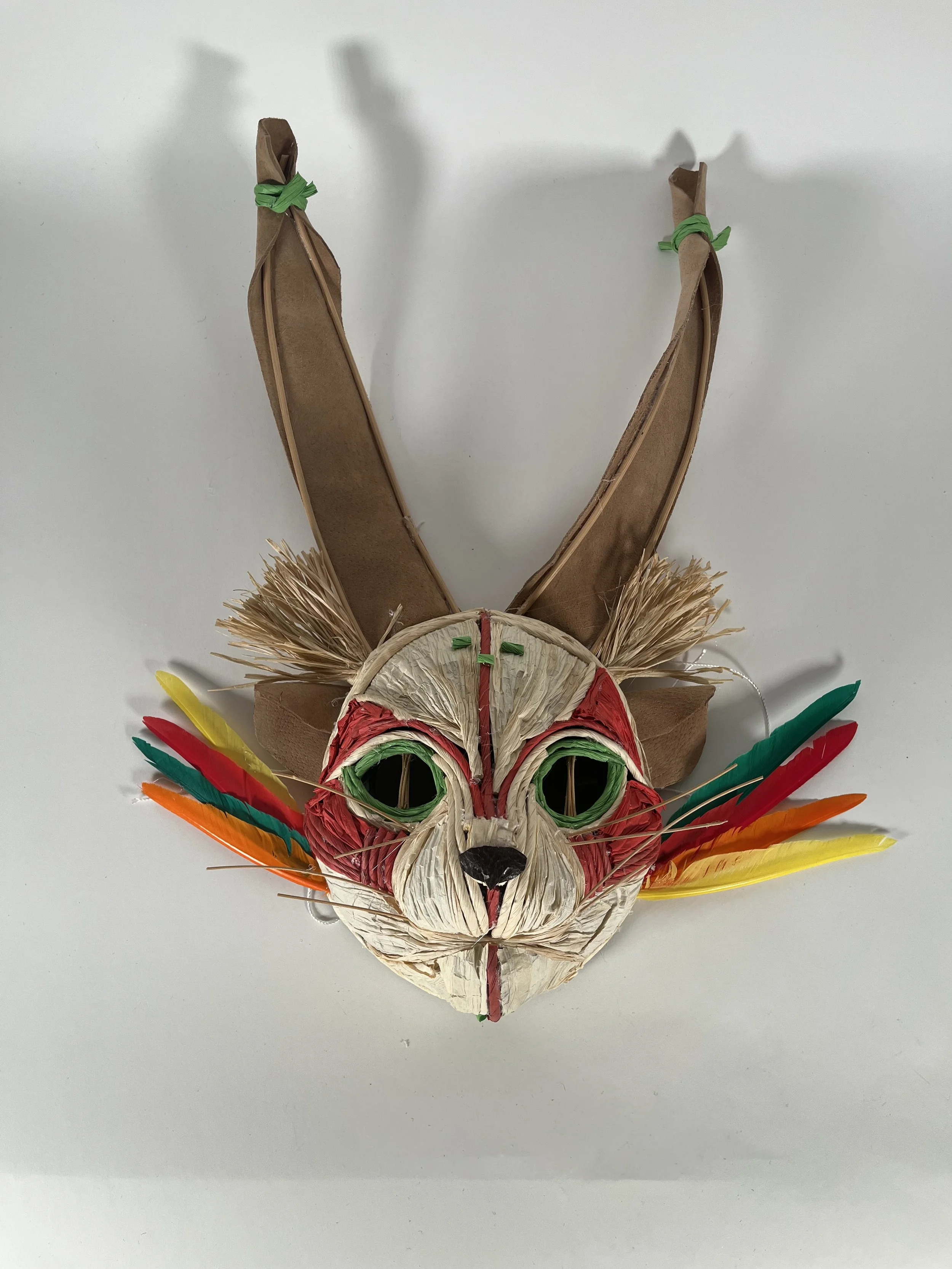
The creation process was very different for my usual style. I created the mask by a mix of 3d printing and with the use of basket weaving-like materials, which was able to make an artificial effect that resembles the Guising style. By using various materials such as leather, feathers, wood and hay, I was able to create a simple design that does what I want. After I sewed a cloak to go over my body to help diffuse my human shape. Then I carved a walking staff out of wood. I finalized the look by using a Celtic knot clasp to hold the cloak up to complete the costume.